
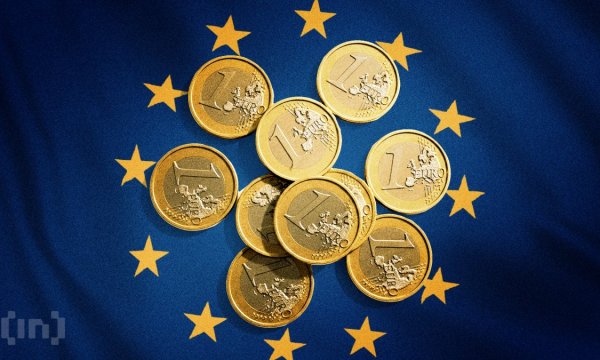
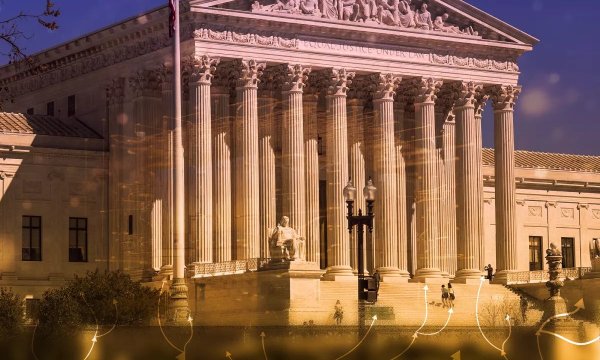
This week «Deconstruction» focuses on the ambitious plans of Sam Bankman-Fried, Tether's strategy to bypass MiCA rules and the ban on a digital dollar in the US. We also discuss the burst memecoin bubble, the legal battles of traditional exchanges over monopoly and the global trend of states cracking down on the privacy of correspondence. Sam Bankman-Fried's ambitions FTX founder Sam Bankman-Fried, who is serving a 25-year sentence for one of the largest financial frauds, is making ambitious plans for life after release. He confided to his cellmate that to «make serious money» he would need $50M-$100M in startup capital, and mentioned a crypto project that «everyone will flock to». In parallel, he appealed to Donald Trump for a presidential pardon, and his parents hired lobbyists. The community again recalled FTX's venture investments (stakes in SpaceX, Anthropic, Solana worth $114 billion in total), which the bankruptcy administrators sold for a sum dozens of times smaller. Still, most commentators agree: although SBF may be a brilliant investor, he did completely unacceptable things by illegally using clients' money. So even if he was not joking about a future crypto project, it is hard to imagine him managing to win back trust. Tether's strategy in Europe The European authority ESMA announced that by July 1 all crypto platforms must obtain a license under the new MiCA regulation, otherwise they are required to fully cease serving EU clients. Tether's management deliberately declined to obtain a license, deeming the requirement to keep 60% of reserves in European banks risky for financial stability. However, the company chose a strategy of bypassing the direct restrictions and now invests in partners that already hold legal status. Fully legitimate stablecoins will be issued through them, and thus Tether will indirectly preserve its presence in the EU market without direct subordination to local officials. At the same time, the forced delisting of USDT in Europe will hit professional market participants: market makers will have to split liquidity pools, cross-exchange arbitrage will become more complicated and spreads will widen. Ban on a digital dollar in the US The US is moving toward a legislative ban on a digital dollar at least until the end of 2030. The provision prohibiting the Fed from issuing a CBDC is embedded in an affordable housing bill — this very packaging made it possible to overcome the resistance that had stalled a separate anti-CBDC document. American lawmakers fear specific things: total surveillance of every transaction in real time, control over spending (programming money with the ability to freeze it without a court order, as in the digital yuan) and the crowding out of commercial banks. Private stablecoins, meanwhile, are clearly exempted from the ban. For the global CBDC race this means that the world's largest economy is officially withdrawing from it, while stablecoins are designated as an alternative the state is willing to tolerate. The aftermath of the memecoin hype Revenue at the Pump.fun platform plunged by more than 70%. The platform allowed anyone to issue their own token for a couple of dollars, which led to an explosive growth in the number of new coins, but in the end almost 96% of all traders either lost money or earned no more than $500. To prevent the price from falling, the developers announced a token burn worth about $370 million (36% of the supply). The situation reflects a large-scale capital reallocation process: investors are massively locking in losses, withdrawing liquidity from unregulated instruments that large players regard as gambling, and returning funds to TradFi. The practice of buying assets without fundamental value has stopped working; traders have to return to basic rules and seek digital assets with real practical use, which makes the market safer. CME Group defends its monopoly The operator of the Chicago Mercantile Exchange, CME Group, will sue the regulator CFTC over its permission for the Kalshi platform to launch perpetual futures. CME head Terrence Duffy formally appeals to investor protection (comparing high leverage to the 2008 mortgage crisis) and the Dodd-Frank Act. At the same time, CME holds exclusive licenses for all the main benchmarks on which futures contracts are built. Duffy combined concern for investors and the defense of his monopoly in the lawsuit. The logic runs roughly like this: we control the benchmarks, therefore new instruments on these indices must trade with us. A similar pattern is seen at ICE, which demands «equal rules» due to the growth of the Hyperliquid platform. The destruction of the privacy of correspondence The UK government is preparing a law that will completely ban the use of social networks (Instagram, TikTok and YouTube) for citizens under 16, while in France and the EU an initiative is being pushed for mass scanning of personal messages on smartphones before they are sent. A global trend is emerging: under the pretext of fighting terrorism or protecting children, governments are forcing citizens to give up the basic right to privacy. As Pavel Durov noted, the forced abandonment of end-to-end encryption technology (the embedding of backdoors) will in no way stop real criminals, since they can easily write their own closed apps. In the end, it will be ordinary law-abiding citizens who come under fire. In addition, weakening encryption systems makes the corporate networks of banks and funds vulnerable to hacker attacks and data breaches, and to preserve privacy users will have to switch to decentralized services. This is an abridged version of the podcast. Watch the full episode: https://www.youtube.com/watch?v=DgiBzekHjfw Subscribe to the podcast: Apple Podcasts Spotify YouTube Deezer Yandex.Music YouTube Music
Source: ForkLog
Новости в мире криптовалют


Random quote about money
"Нажить много денег - храбрость; сохранить их - мудрость, а умело расходовать - искусство."
Interesting posts in other sections of the blog









* to search the proxy database, just enter a country name, e.g. Russia, USA, Thailand