A scientific breakthrough and empty pools: what brought Cardano to a crisis?
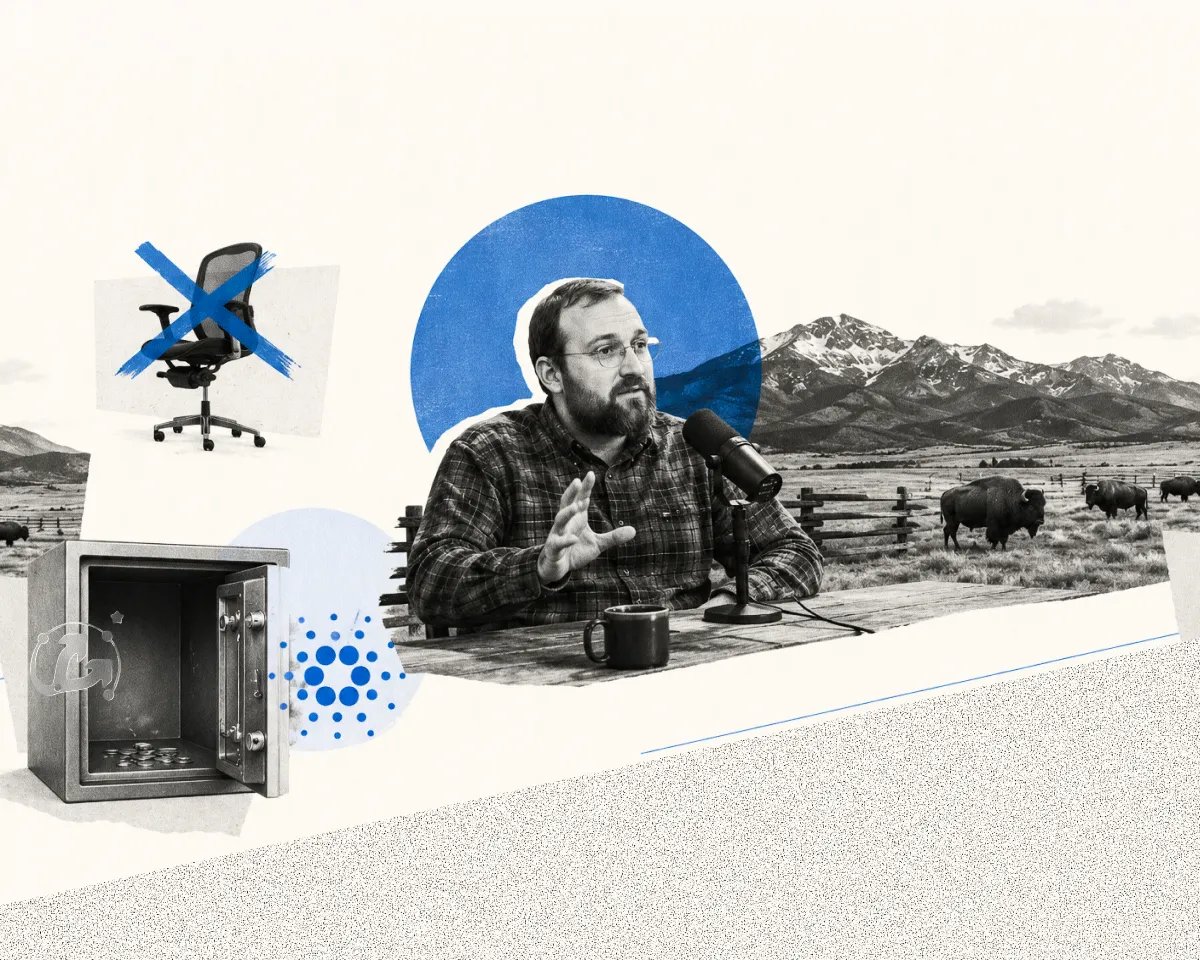
The first week of June 2026 became a period of serious trials for the Cardano ecosystem. The community rejected funding for the flagship Cardano Summit 2026 conference, the major analytics service TapTools announced its shutdown, and the ADA token's price fell below $0.20 for the first time since 2020. Against the backdrop of these events, the community again started talking about a crisis of the project.
In a new piece, ForkLog tried to examine the situation and prospects of the blockchain platform taking into account new details shared with the editors by a former employee of IOG — the developer of the Cardano protocol — and now a professor at the cybersecurity department of the Institute of Computer Science and Artificial Intelligence at V. N. Karazin Kharkiv National University, Roman Oliynykov.
Everything against growth
The cancellation of the flagship Cardano Summit 2026 in Singapore became the first serious test for the new decentralized governance system of the Voltaire era. The non-profit Cardano Foundation (CF) requested 7.8 million ADA from the treasury (about $1.3 million on the Binance exchange at the time of writing) to hold the main event of the year, and the majority of dRep delegates supported the initiative. However, the proposal fell short by 1.46% of the votes.
The foundation itself abstained from voting for the sake of impartiality, and public appeals by Cardano co-founder Charles Hoskinson and CF CEO Frederik Gregaard failed to influence the outcome. Instead of a full-fledged summit, the ecosystem will be limited to a booth from EMURGO's commercial division at the TOKEN2049 conference.
This precedent clearly proved to the industry that in the updated Cardano network authorities no longer play a decisive role — now everything is determined by the DAO and the treasury balance.
However, the first serious transformation in the Cardano community went almost unnoticed by the media.
Roman Oliynykov believes that funding problems began to appear much earlier:
«My main tasks were related to research in Project Catalyst, and at the end of 2025 — beginning of 2026 the project at IOG was closed. Employees engaged in research and development engineers were laid off, and the team handling operational support for previous funds was transferred to the Cardano Foundation».
Oliynykov suggests that this was about optimizing IOG's activities, accompanied by the reduction of individual teams and research areas. At the same time, the expert did not detect any obvious changes in the management process. According to him, all of this was preceded by the usual annual reports and budgeting procedures for the next period, as before.
Not long ago the ecosystem lost two popular platforms. On May 23, 2025, JPG.store — the largest Cardano NFT marketplace, which had dominated the market for more than three years — closed. On June 3, 2026, TapTools — one of the main analytics services for more than a million users — announced it was winding down. The cause was a staffing collapse: over a short period the team was left by both co-founders, the operating and technical officers, as well as the backend developer who temporarily served as CTO. There was no one left to maintain the infrastructure.
Charles Hoskinson reacted to TapTools' closure with a post on X:
«I'm taking a break. We'll talk later».
Returning to the public arena, he admitted that he had previously proposed creating a treasury «index» to support troubled ecosystem startups, but the idea was never implemented. Hoskinson added that the second half of 2026 may bring a «wave of bankruptcies» and the consolidation of small protocols.
Prices reacted predictably. According to TradingView, on June 4 ADA broke through the psychological level of $0.20 for the first time in more than five years. Between June 6 and 10 the asset tested the marks of $0.148–0.162. The drop from the 2021 all-time high ($3.09) exceeded 93%.
According to DeFiLlama, at the time of writing the total value locked (TVL) in the network had fallen by more than a third over the month, to $93 million.
The main question for the industry remains the nature of the current events: whether they are the costs of growing real decentralization or a sign of an ecosystem crisis.
The price of decentralization
According to the Cardano Foundation's report, as of the end of 2025 the organization held 287.5 million Swiss francs (about $361 million) on its balance sheet. Over the year the foundation diversified its reserves: ADA's share in the portfolio fell to 51.6%, bitcoin holdings grew to 25.5%, and the volume of fiat funds reached 22.9%.
Despite the available funds, the decline in the ADA price strongly affected CF's long-term planning, which in turn triggered a cascade effect of cuts across all sectors.
IOG developers had to reduce the financial burden on the ecosystem: for 2026 they requested $46.8 million from the community, which is half the previous year's figure.
In parallel with the handover of authority to dRep delegates, the work of Project Catalyst — the ecosystem's main grant mechanism — slowed down. Management of the program passed from IOG to the Cardano Foundation, after which the Fund15 and Fund16 rounds were canceled, and the reserved liquidity was returned to the common pool until a stricter payout model tied to KPIs is introduced.
Infrastructure projects whose business models relied on the expectation of regular tranches faced a funding shortfall. In the absence of venture support and stable revenue, some startups could not survive this pause. The closure of TapTools and JPG.store was not so much a direct consequence of a lack of treasury funds as a result of the transition to stricter financial discipline. Under the new conditions the DAO refuses to subsidize unprofitable projects amid macroeconomic pressure on the industry.
Academic isolation
The halt in grant funding would not have been critical if projects could compensate for the shortfall with external venture capital. However, here development runs up against Cardano's technological foundation. While the industry standardized around EVM and layer-2 (L2) solutions, the IOG team initially bet on an alternative architecture — Extended Unspent Transaction Output (eUTXO).
From a technical standpoint the eUTXO model provides a high degree of security: native tokens function at the base layer of the blockchain rather than inside smart contracts. This minimizes the risks of logical vulnerabilities typical of networks like Ethereum or Solana.
In Oliynykov's opinion, the competition was clearly meaningful in terms of the properties of consensus protocols. If you assess them by their level of decentralization and security guarantees, the Ouroboros family is head and shoulders ahead:
«During the development of consensus protocols for Cardano, truly cutting-edge and unique scientific results were obtained, laying down a new direction in the field of research into decentralized systems».
To understand the difference, Oliynykov provided a precise comparison of the mechanics of the Ethereum and Cardano blockchains.
Partition Tolerance:
- Cardano. Uses the longest chain rule. The protocol remains operable even when the P2P network splits into subnets (for example, during communication failures between continents);
- Ethereum. Relies on BFT finalization. A network partition causes consensus failures and exposes honest nodes that end up in the minority or offline to risk.
Adaptive Security model:
- Cardano. Has rigorous security proofs in conditions where an attacker can dynamically bribe any consensus participants within their quota (<50% of the stake);
- Ethereum. The consensus protocols have no proofs of cryptographic robustness in this threat model.
Built-in protection against Long-Range Attacks:
- Cardano. The vulnerability is closed at the level of the fundamental protocol (Ouroboros Genesis). In addition, Key Evolving Signatures are applied: even a complete theft of a node's current private keys will not allow a hacker to generate valid blocks for past epochs;
- Ethereum. Such protocol-level mechanisms are absent; protection is implemented exclusively through external engineering methods (checkpoints / weak subjectivity).
Staking economics and level of decentralization:
- Cardano. Liquid staking. There is no locking of funds, no minimum entry threshold and no penalties (slashing). This maximizes the share of coins participating in consensus, making an attack prohibitively expensive;
- Ethereum. Requires huge starting capital, lengthy locking of funds and carries the risk of penalties. Mass delegation is implemented through third-party smart contracts, which transfers the risks of vulnerabilities in contract code and the virtual machine directly to the blockchain's security level.
Academic rigor and formal proofs:
- Cardano. Based on transparent logic with mathematically rigorous proofs of cryptographic robustness. Each protocol of the Ouroboros family has undergone peer-review at leading world cryptographic conferences;
- Ethereum. The level of formal mathematical proofs and academic verification of consensus protocols is incomparably lower.
Later, engineers of the blockchain projects Polkadot and Mina Protocol made use of the breakthrough in Cardano's architecture. In turn, Ethereum successfully switched to PoS, using a structure of epochs and slots (Gasper) similar to Cardano, which confirmed the viability of such a time model for the largest networks.
However, for DeFi this mathematical rigor turned into structural isolation. The entry threshold for developers remained high. You cannot take auditor-verified code of a lending protocol in Solidity and quickly launch an analogous dapp on Cardano. Smart contracts must be written in Haskell or Plutus — functional programming languages whose specialists are in short supply in the crypto market.
The situation was aggravated by an insufficient number of stablecoins providing base liquidity in DeFi. Major issuers like Tether (USDT) and Circle (USDC) still have not deployed native issuance on the network. Coins have to be transferred via cross-chain bridges and their wrapped versions used.
According to DeFiLlama, the total capitalization of «stablecoins» on Cardano significantly lags behind competitors, and algorithmic and synthetic alternatives like Djed have failed to provide the market with the necessary depth.
In April 2026 the Cardano Foundation allocated an eight-figure sum in ADA to the market maker Flowdesk. The funds were directed at saturating key pools with liquidity to reduce slippage and strengthen the peg of the local stablecoins USDM and USDA.
As a result, market makers and institutional investors give the network a wide berth. Due to the absence of the usual derivatives, the shortage of native fiat pairs and throughput limitations, they have nowhere to deploy capital.
Has too little time passed?
The current ecosystem crisis highlighted the mental and strategic gap between Charles Hoskinson, the Cardano Foundation and retail investors. While the community demanded marketing activity and an inflow of liquidity, Hoskinson distanced himself from Web3 trends toward transparency.
Источник: ForkLog
Новости в мире криптовалют


Random quote about money
"Единственное, что можно делать без денег, — это долги."
Interesting posts in other sections of the blog








* to search the proxy database, just enter a country name, e.g. Russia, USA, Thailand