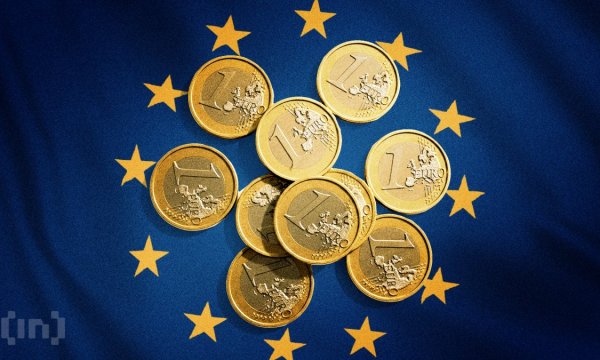
From July 1, the transition period for cryptocurrency platforms under the MiCA (Markets in Crypto Assets) regulation ends in all 27 European Union countries. The European Securities and Markets Authority (ESMA) confirmed that no delays are possible: crypto companies that failed to obtain a license are obliged to stop serving EU clients, otherwise their activity will be considered a direct violation of the law. What MiCA regulates MiCA is the world's first comprehensive set of rules for the crypto market developed at the level of an entire macro-region. Its main provisions: The document clearly divides cryptocurrencies into e-money tokens (EMT — classic fiat stablecoins), asset-referenced tokens (ART), and utility tokens. Crypto-asset service providers (CASP — exchanges, wallets, exchangers) are required to obtain a single license. The main incentive for compliance is the system of regulatory "passports." A company that has received approval in one EU country automatically opens itself legal access to the markets of all the other 27 states of the bloc. Issuers of crypto assets must publish detailed white papers (describing all risks) and bear responsibility for misleading information. Insider trading and market manipulation are prohibited. Stablecoin issuers are required to undergo regular audits, hold liquid reserves, cover at least 3% of reserves with their own capital, and also keep 60% of the backing in European banks. Who was left behind? The requirements turned out to be manageable not for everyone. According to ESMA as of May-June 2026, about 210 companies obtained official CASP authorization. For comparison: before the adoption of MiCA, more than 1,200 officially registered services (VASP) operated in Europe, and the total number of firms operating on the market reached 3,000. Thus, about 80% of platforms were left without licenses. After July 1, companies that did not obtain authorization will not only lose retail clients but also face institutional isolation. They will not have access to regulated European capital, banking partners, or large funds, which by law cannot work with unauthorized counterparties. At the same time, problems with obtaining a license arose even for industry giants. According to ESMA's register of June 12, 2026, the world's largest crypto exchange Binance has not yet received MiCA authorization. As exchange representatives stated, the Greek regulator deemed their application compliant with the rules, but the process is now "stuck" at the level of ESMA's own checks. Binance promises to publish an action plan for European users by June 30, stressing that delays in its licensing will "weaken liquidity and reduce competition across the EU." Large offshore players such as HTX and BitMEX also remain in limbo. At the same time, competitors such as Coinbase, Kraken, Crypto.com, Bybit, Gemini, and OKX have already secured compliance with the rules. For platforms without a license, ESMA left only a few options: urgently obtain authorization, sell the business to a legal player, or launch a closure procedure with the mandatory transfer of clients' assets to an authorized provider. Despite the strict deadline from the pan-European regulator, the implementation of the regulation "on the ground" exposed political friction within the EU itself. While the French regulator threatens violators with criminal sentences and large fines, in Poland the process has stalled: the country's president Karol Nawrocki vetoed the domestic bill regulating the implementation of MiCA. This underscores that the technical and legal readiness of individual EU countries for the new era of oversight is still uneven. The illusion of the brand, closure rules, and the ban on outsourcing In its official statement, ESMA emphasized important nuances that global players try to exploit. Many exchanges operate under one brand but through different legal entities. The regulator warned that MiCA protection extends only to the specific European "subsidiary." Servicing through the offshore structure of a global exchange (even under the same logo) remains outside the EU legal field. Foreign platforms are also denied access to the European audience, with the exception of the extremely narrow "reverse solicitation" loophole. In addition, the agency strictly limited B2B interaction. Now European companies are strictly forbidden to outsource asset-custody services to unauthorized firms from third countries. Exchanges will no longer be able to legally receive funds in Europe and store them in the wallets of their parent structure somewhere offshore. For those who failed to obtain a license, ESMA prescribed not merely to switch off the servers but to implement wind-down plans. Platforms are obliged to notify users in advance and allow them to freely withdraw cryptocurrencies to legal platforms or to personal non-custodial wallets. The fate of USDT: the leader's departure and a banking dead end Particular attention in the context of MiCA is focused on the stablecoin sector. The undisputed market leader USDT from Tether (with a capitalization of more than $180 billion) did not receive approval from European regulators. As Tether head Paolo Ardoino stated in April 2026, the MiCA requirement to keep 60% of reserves in European bank deposits is fundamentally incompatible with the company's business model, so they did not even submit an application. Because of this, the largest exchanges (Coinbase, Kraken, Crypto.com, Binance) gradually removed USDT pairs from their European platforms. For example, OKX began introducing restrictions back in the spring of 2024. Does MiCA really completely ban USDT? Confusion arose in the crypto community about a complete ban on the coin. ESMA explained that there are no direct restrictions on the mere holding and transfer of stablecoins that do not comply with MiCA. This does not violate EU laws, since it is not considered a "public offering" or "admission to trading." However, trading platforms are required to strictly limit services that facilitate the purchase of such assets. As a compromise, the regulator allowed a temporary "sell and withdraw only" regime so that investors could close positions. Nevertheless, as noted in the technical committee of the MiCA Crypto Alliance, the absence of a direct ban does not make USDT legal for free commercial use within the EU. Impact on the market The disappearance of USDT from European spot markets threatens problems not only for ordinary users. The Tether coin has historically been the main liquidity provider for the crypto market and the base trading pair for the vast majority of assets. The forced delisting of the stablecoin in Europe will hit professional market participants: market makers and institutional traders will have to split their liquidity pools. In Europe they will need to provide trading in pairs with USDC or EURC, while on global markets (for example, in Asia) they will continue to work with USDT; due to the desynchronization of base assets, cross-exchange arbitrage between regulated European platforms and offshore exchanges becomes more complicated; the transition to new trading pairs and the reduced depth of order books may lead to wider spreads and increased slippage on large trades. As a result, trading large volumes in Europe will temporarily become more expensive until regulated analogues (such as USDC) build up a dollar mass on EU exchanges comparable to Tether. The paradox of institutionals: why are Ripple and PayPal stalling? However, Tether is not the only major outsider. According to CoinGape, other well-known projects also fall under the regulation: USDe from Ethena Labs, USD1 from World Liberty Financial, as well as PYUSD from PayPal and RLUSD from Ripple. But while Tether's position is a matter of principle, the case of Ripple and PayPal highlighted the discrepancies between American and European compliance. Ripple initially positioned the RLUSD stablecoin as a legal alternative to USDT for Europe. In the U.S. the project is regulated by the New York Department of Financial Services (NYDFS), but MiCA does not recognize American licenses. To operate in the EU, Ripple had to open a subsidiary, Ripple Payments Europe SA, in Luxembourg and apply for a local EMI (electronic money institution) license. The review and audit process dragged on, and the company simply did not make it before the deadline. PayPal's PYUSD token is issued by Paxos Trust Company, which is controlled by NYDFS and keeps its backing in U.S. Treasury bills. To comply with MiCA, the company would need to carry out a complex restructuring: create a European branch and transfer 60% of the dollar backing to the management of EU banks. Publicly, PayPal avoids criticizing the European authorities, but de facto the company shifted its focus, directing efforts toward expanding PYUSD into its own Venmo and Xoom payment systems in regions with softer regulation (Latin America, Asia, and Africa). As a result, the only stablecoins from the top 10 that fully comply with the regulation currently remain USDC and EURC from the company Circle. Tether's plan "B": betting on partners Despite the departure of classic USDT from Europe, Tether is not giving up on the European market, choosing a white-label strategy. Companies backed by Tether (for example, StablR and Oobit) have already introduced stablecoins compliant with the MiCA regulation. In particular, this concerns the euro-pegged token EURR and the dollar token USDR. To issue them, Tether's new tokenization platform Hadron is used. Payment apps integrate these regulated assets, offering up to 5% cashback in order to move users into the legal field faster and make stablecoins the main payment instrument. Fragmentation, but not a catastrophe Tatiana-Eliza Baseley, founder of the Baseley & Partners agency, noted that in assessing the current risks for the industry, the pro-MiCA (regulatory) and pro-Tether (market-libertarian) points of view compete. In the expert's opinion, the forced delisting of USDT in Europe will fragment liquidity but will not destroy its global positions. "The EU is far from the largest USDT market, given that institutionals are already switching to USDC, and the market quickly adapts to new trading pairs. USDT remains the dominant dollar stablecoin on the global market, especially outside the EU. At the same time, liquidity will only partially move to offshore platforms, non-custodial wallets, and DEXs," — Baseley stressed. The expert drew attention to the fact that a move into the gray zone or DeFi will be heavily limited: "DEXs are not a full-fledged replacement, since they are aimed at technically prepared users, and I do not expect institutionals to move to DEXs." As for working through offshore platforms, Baseley warned of tighter oversight by the authorities. According to her, MiCA takes a much stricter view of a situation where an offshore platform is advertised or hires agents in the EU. At the same time, European regulators increasingly analyze the actual economic activity of a service provider, not just formal statements. "Relying on reverse solicitation as the main business model is very risky. Accordingly, this is one of the factors hindering the flow of liquidity offshore," — the lawyer noted. On questions of arbitrage, the expert forecast a rise in operating costs in the short and medium term, since market makers will have to use intermediate assets (USDC, EURC/EURR, or a bank fiat rail) more often. Regulated analogues will win mainly in the European institutional segment. "At the same time, one must also take into account the interconnection of institutional markets with one another. Many American analysts expect that potential regulation in the U.S. could make the positions of USDT or USDC disproportionately more advantageous compared with many local players, and this will create a new balance of power between large issuers and European lawmakers," — the founder of Baseley & Partners summed up. Regardless of the distribution of forces on the world stage, July 1, 2026 will be the final deadline for the MiCA transition regime. At the same time, the rules for stablecoin issuers have been in effect since June 30, 2024, and for crypto-asset service providers since December 30, 2024. https://forklog.com/news/nezdorovaya-konkurentsiya-i-uvelichenie-rashodov-vliyanie-mica-na-bitkoin-industriyu Recall that the EU's traditional financial sector is preparing its own alternative to "stablecoins." A consortium of 37 of the largest banks (including BNP Paribas, ING, and Rabobank) is developing a single euro stablecoin Qivalis, designed to reduce the region's dependence on dollar digital infrastructure.
Source: ForkLog
Новости в мире криптовалют


Random quote about money
"На деньги надо смотреть свысока, но все-таки при этом не следует терять их из виду."
Interesting posts in other sections of the blog







* to search the proxy database, just enter a country name, e.g. Russia, USA, Thailand