Scientists created a model for "programming" atoms without magnetic fields
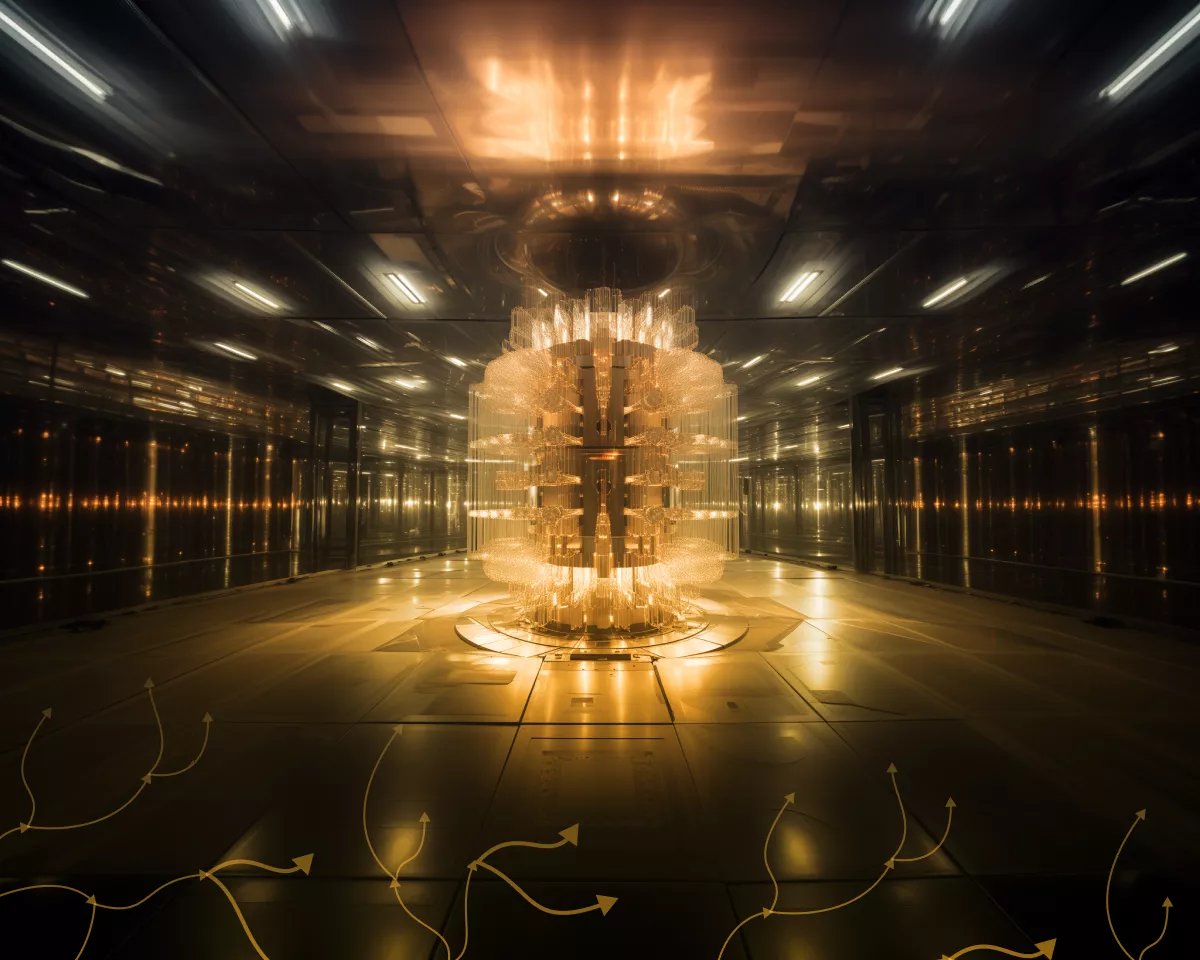
Researchers from the Faculty of Physics at Vilnius University have developed a theoretical model that uses light to pre-"program" atoms without the need to use external magnetic fields.
According to the authors' concept, light first "programs" the atoms, and then the pre-prepared atomic medium changes the shape and polarization of complex laser beams.
At the center of the model are optical vortices: beams with a spiral wavefront structure, where intensity in the "core" drops to zero. The size of the dark region is set by the topological charge, which "is not limited and can take any positive and negative integer values."
In practice, up to 10,000 different states can be obtained — and information can be encoded in qudits rather than in a two-state qubit system.
To control vector vortices, the researchers examined the interaction of a beam with an atomic gas in which the atoms have three energy levels. In the model, the prepared medium inherits the spatial pattern of light: in some regions the atoms absorb radiation more strongly, in others they become almost transparent. Then feedback begins — the atomic response reconfigures the beam itself.
Instead of a simple ring structure, a petal-like pattern appears with several bright regions around the center — and the polarization structure itself changes as well. Previously, such control usually required powerful external magnetic fields and complex equipment.
Theoretically, this development opens the way to faster quantum processors, highly secure quantum communication networks, and ultra-precise optical sensors.
As a reminder, on June 17 one of the sixteen national laboratories of the US Department of Energy, Sandia National Laboratories, and the quantum computer developer Quantinuum published a peer-reviewed paper on the 98-qubit Helios quantum computer.
Source: ForkLog
Новости в мире криптовалют




Random quote about money
"Если вам говорят, что дело не в деньгах, значит, это не ваше дело."
Interesting posts in other sections of the blog












* to search the proxy database, just enter a country name, e.g. Russia, USA, Thailand